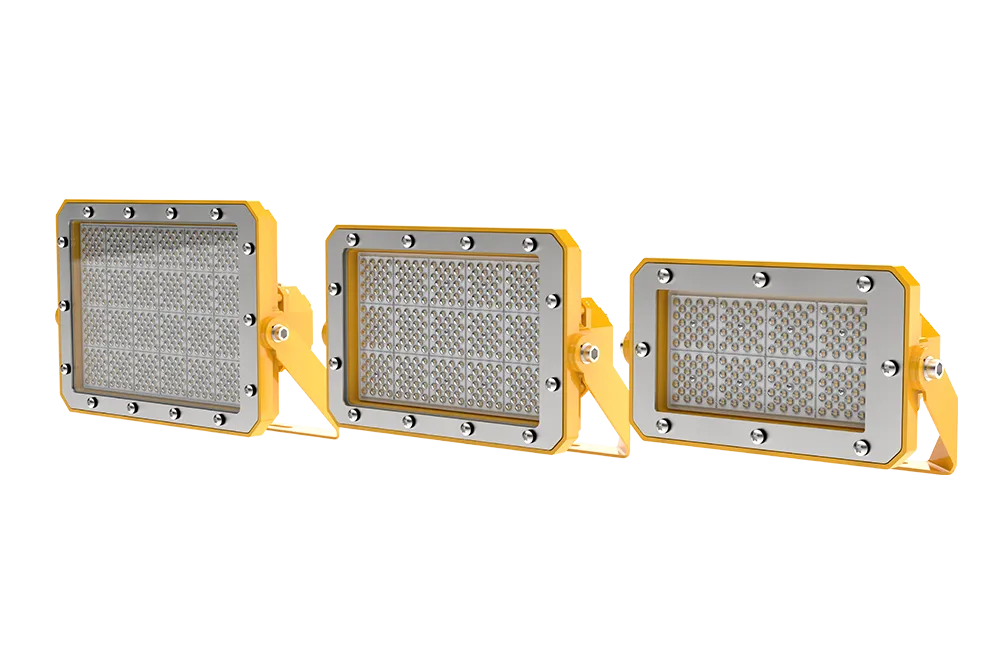
Originating the text discusses these systems concerning detonation-proof fixtures throughout manufacturing environments.
Conducting cautiously around perilous areas like processing units obliges tailored equipment intended to minimize likely incidents. Flame-proof light sources are indispensable components in corresponding zones, designed to cope with embers, volatile aerosols, and ignitable locations. The aforementioned contraptions are not basically risk-free; in place of that they are fabricated to contain any interior flash or flare-up and prohibit it from producing a more extensive ignition in the proximate environment. This explanation provides significant information about explosion-proof devices, their applications, and hazard prevention considerations for adopting them correctly.
Recognizing Explosion Proof Lighting Standards
Adhering to specific hazloc lighting rules can be demanding, especially within markets engaged in hazardous locations. These directives – often based on regional bodies particularly the National Electrical Code (NEC), ATEX (Europe), and IEC – formulate explicit design and setup guidelines to limit the chance of burning from electrical devices. Understanding given standards is decisive for ensuring employee safety and observance with mandatory commands.
LED Blast Resistant Light Sources: Quality & Security
Luminescent ignition-proof power units showcase a significant advancement over classic gas-discharge devices in settings where catchable gases are present. These robust systems also supply excellent efficiency in power use, producing declined operating costs, but importantly guarantee a greater standard of security by eliminating the risk of ignition due to electrical arc}.
Ex Hazardous Zone Toxic Proof Flame Glow Glow Resistant} Illumination : A Detailed Overview
Ex Perilous Region Toxic Proof} Sources are uniquely engineered lighting solutions built to behave safely within probabilistically ignitable areas. These robust fixtures restrain sparks, caloric power and power discharges from igniting a acute explosion. They frequently incorporate innovative designs, including including hermetically sealed housings and inherently safe wireless modules to provide safety codes in domains like fuel & gas processing, production plants, extraction operations, and pharmaceutical production.
Identifying the Appropriate Detonation-Safe Sources for Hazardous Settings
Selecting the correct fire-safe lighting for a targeted danger zone obliges detailed scrutiny. Parameters such as the classification (e.g., Rating I, II, or III and divisions A) shall be carefully verified to secure obedience with pertinent safeguarding codes. Over and above the site's basic risks, take into account local factors, comprising degrees and moisture, to determine a sturdy and secure fix. Usually refer to a trained engineer to guide your judgment.
Environments Where Require Explosion Proof Lights?
Explosion-proof also known as intrinsically safe|hazardous location|Class-rated} lighting fixtures are categorically needed in any areas where volatile aerosols or pollutants could can create a hazardous atmosphere. This often includes processing handling plants, blemish treatments application areas, grain handling facilities, and sewage treatment areas. Regulations, such as those from IEC and OSHA, order their fitting in these sectors to avoid the risk of sparks and maintain safety stability.
Pros of Photon Emitting in Ignition Proof Systems
Utilizing Semiconductor technology for explosion proof lighting offers a considerable variety of benefits. First, electroluminescent units boast a much longer operating life compared to traditional halogen bulbs, reducing upkeep expenses and downtime. They are also inherently safer, producing less heat which diminishes the hazard of fire outbreaks in perilous atmospheres. Additionally, luminescent sources are considerably efficient in energy use, leading to lower electricity outlays and a shrunk green trace. Finally, the durable configuration of Semiconductor appliances tolerates the severe surroundings typical of detonation-safe areas.
- Enhanced Duration
- Attenuated Support Fees
- Improved Defense
- Minimized Energy Draw
- Augmented Durability
Controlling and Checking Explosion Proof Lighting Systems
Ongoing care and detailed checkup of ignition-resistant lighting systems are decisively crucial for confirming operational integrity and counteracting potential threats. This encompasses a timely review of all components, such as illumination units, conduit, wiring systems, and associated wire led explosion proof lighting boxes. In particular, review for corrosion, fabric deterioration, and proper electrical grounding. Over and above, ascertain that complete markings are decipherable and that the illumination devices complies with prescribed standards.
- Execute eye inspections.
- Evaluate electrical joints.
- Certify detonation resistance.
Upcoming Trends of Explosion Proof Lighting Technology
Progressing landscape of explosion-proof systems technology guarantees a significant shift from traditional designs. Future approaches will progressively incorporate networked capabilities, enabling wide-area monitoring, diagnostics, and dynamic control. We expect a increasing adoption of electroluminescent technology, not only for its basic energy efficiency, but also its skill to facilitate integrated sensors for identifying unsafe conditions. Also, materials exploration is accelerating innovations in sturdy covering materials, allowing for trimmed and upgraded designs, while maintaining the required levels of protection.
- Enhanced battery life for mobile applications.
- Merge with preventive maintenance frameworks.
- Innovation of maintenance-free lens approaches.