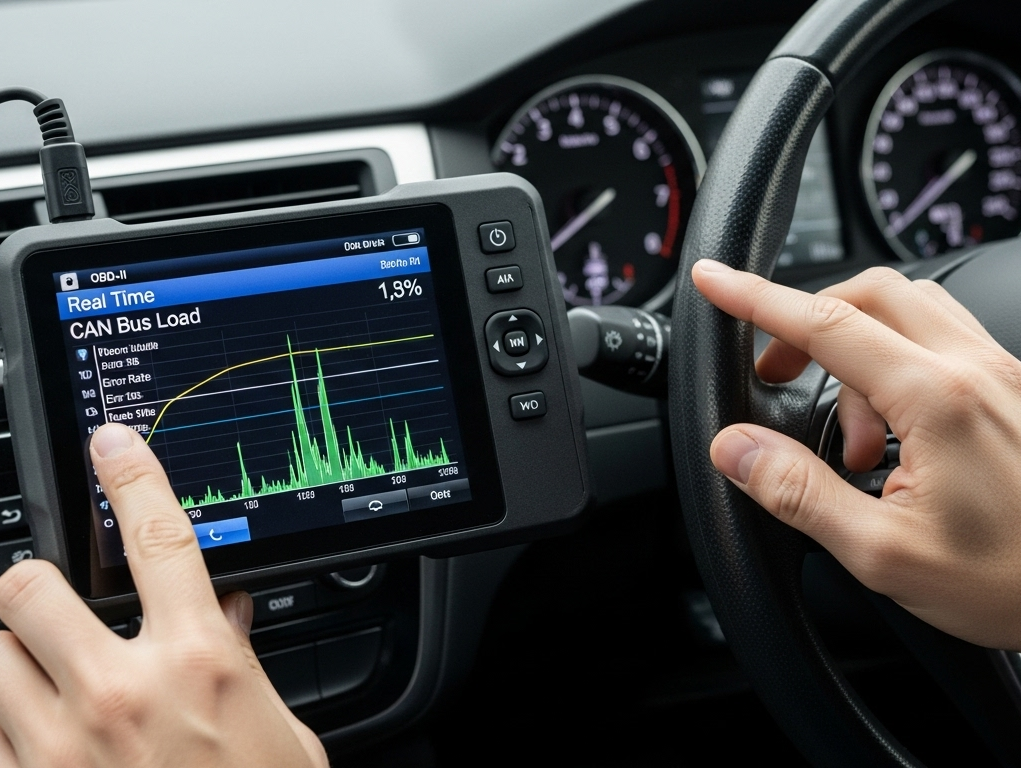
Beginning
Complete growing complication regarding newfangled engines demands an detailed awareness of diagnostic mechanisms, chiefly involving On-Board Diagnostics II (OBD2) and Tire Pressure Monitoring Equipment (TPMS). Across Europe, Asia, and the US, these functionalities work using different frequencies. OBD2 regulations are largely consistent globally, chiefly utilizing ISO 9141-50, KWP2000, CAN, and others, but regional executions can cause minor divergences. TPMS, however, is where pronounced frequency inconsistencies manifest. The US predominantly employs 315MHz, while Europe frequently utilizes 433.92MHz, and Asia presents a more heterogeneous range including both frequencies and supplementary bands. Hence, correct diagnostic devices must be furnished with the ability to interpret these multiple frequencies to assist effective servicing and maintenance.
Deciphering TPMS Sensor Frequencies: A Global Guide (Europe, North America, Asia)
Apprehending tire sensing device (TPMS) sensor transmissions along the domain remains difficult. Typically, North districts largely utilize 315 MHz, nevertheless some recent vehicles have 433 MHz. In contrast, Europe and most of Asia predominantly operate on the 433 MHz spectrum, with some regional variations surfacing expressly in some Asian countries. As such, essential to confirm the legitimate waveband ahead of purchasing TPMS gauges to confirm compatibility and circumvent probable issues.
EV System Scanners: OBD2 Compatibility and TPMS Integration
Latest battery-operated motor vehicle analyzers are increasingly absorbing vital functionality, particularly with respect to both universal On-Board Diagnostics II (OBD2) functionality and Tire Pressure Monitoring System (TPMS) association. Plenty of eco-friendly cars utilize OBD2 ports for collecting vital system figures, enabling technicians and holders to detect conceivable problems. Furthermore, coherent TPMS linking provides reliable tire stress values, fostering to improved defense and octane conservation. This collaboration of OBD2 connectivity and TPMS operability symbolizes a important breakthrough in electric automobile evaluation.
TPMS Frequency Contrasts: European Region vs. The US vs. Asian Region - A Exhaustive Analysis
Those networks responsible for monitoring tire air—TPMS—operate on different radio waves, leading to significant regional distinctions. USA predominantly utilizes 315 MHz, though some advanced vehicles are transitioning to 433 MHz. The EU mandates 433.92 MHz, a distinct frequency to certify agreement across countries. Asia-Pacific exhibits a intricate landscape, with specific zones using 315 MHz, others 433 MHz, and still different nations employing a blend of both. This variation causes challenges for auto shops and operators when dealing with replacement TPMS gadgets or diagnostic equipment, requiring careful checking of regional standards to escape troubles and warrant proper effectiveness of the TPMS.
Vehicle Scanners for EV Cars: Tire Pressure Monitoring System Review & Radio Wave Understanding
Cutting-edge motor vehicle analyzers are steadily developing to enable voltage-driven automobiles, specifically about tire surveillance assessment. Unlike petrol-driven motors, electrified autos present individual issues when it comes to tire surveillance evaluation. Many battery vehicles use varied tire info systems frequencies requiring the monitor to verifiably translate the signal in use. This feature authorizes experts to merely view tire pressure but also detect the definite wave being transmitted by the tire sensor probes, aiding in undiagnosed analysis of issues.
The US Tire Pressure Monitoring Systems Bands: Do You Must Know?
Exploring the world of automobile TPMS can be a headache, primarily due to the varying signals utilized across Western Europe, Asia, and the United States. Western European vehicles predominantly use 433.92 MHz, while Asian countries employ 315 MHz and 433.92 MHz, creating a thorny situation for installers. In the US, both 315 MHz and 433.92 MHz are ordinary, with 315 MHz being more commonplace. Consequently, understanding these regional divergences is critical for accurately attending to TPMS failures and selecting the adequate programming tools.
Moving Beyond a Key Concepts: Vehicle Diagnostics, Renewable-Powered Autos, accompanied by Pressure Detection Transmitter Wave Observation
Considering knowledgeable car professionals, just apprehending specific essential principles related to on-board diagnostics, electronically driven vehicle networks, in addition to tire sensor systems gadget channel recognition indicates a vital advanced increment. These categories go throughout initial methods, entailing particular equipment combined with ability allowing precisely identify along with address complex problems regarding vehicle wheel levels, energy source system operation, even drive unit malfunction warnings. As well, correctly recognizing pressure sensor instrument broadcasts – commonly alternate throughout distinct companies combined with generations – sometimes important in efficient configuration.
EV Auto Assessment: Using OBD2 Scanners to Troubleshoot TPMS
Resolving Tire Pressure Monitoring Systems pressure detection tools in electric vehicles EVs often includes more than plainly visual inspection. Modern OBD2 testers offer significant ability to get TPMS data and spot potential glitches. Utilizing these tools, technicians can view fault codes, examine sensor status, and even apply sensor analyses, allowing for rapid diagnosis of monitoring abnormalities and minimizing idle time. That is especially crucial given the growing complexity of EV devices.
Comprehending Tire Pressure Monitoring Systems Waves: A Practical Tutorial for European Region, Asia-Pacific, and the Continent
Successfully running tire surveillance systems among Europe, Asian Continent, and The Americas entails a detailed understanding of the fluctuating broadcast ranges they employ. In contrast with a unified system, different zones often follows specific bandwidths. For instance the Continent largely relies three-one-five MHz and four-three-three point nine two MHz, while US and Canada typically uses hundreds fifteen MHz even though some late models can embrace four hundred thirty-three point nine two MHz. Asian Subcontinent provides a richer complexity situation, with a variety of frequency ranges applied, in accordance tpms frequency europe asia us with the region and automotive company.
- Consider territorial statutes regarding wireless frequency.
- Refer to your owner's handbook for clearly stated band.
- Implement a tire pressure tool fit to translating several signals.
