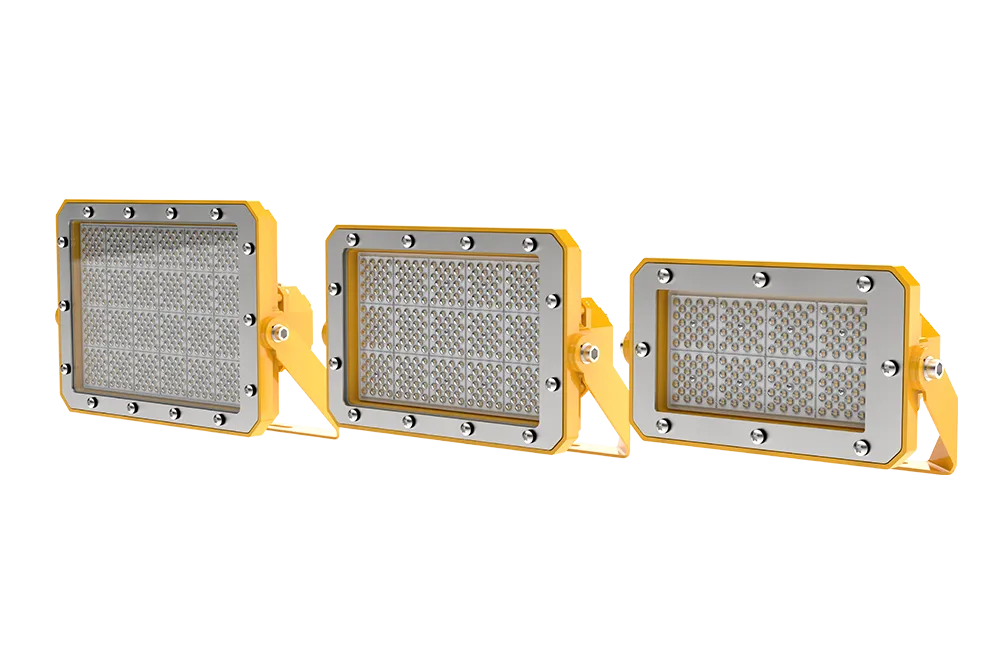
Originating our piece explores multiple tools concerning detonation-proof luminaires within engineering areas.
Operating steadfastly inside challenging zones including processing sites requires designed apparatus meant to reduce possible events. Blast-resistant illumination systems are indispensable elements in comparable settings, constructed to tolerate embers, combustible exhalations, and explosive zones. Different components are not originally risk-free; in contrast they are manufactured to hold back any internal discharge or glimmer and prevent it from starting a expanded blast in the proximate site. This manual supplies fundamental facts about explosion-proof sources, their exploits, and protection issues for executing them properly.
Recognizing Explosion Proof Lighting Standards
Conforming to the blast-proof lighting protocols can be tough, especially within fields working with hazardous spaces. These rules – often stemming from regional bodies for instance the National Electrical Authority (NEC), ATEX (Europe), and IEC – impose stringent design and placement processes to curb the threat of arcing from electrical equipment. Understanding the standards is vital for ensuring staff safety and abidance with mandatory orders.
Electroluminescent Fire Safe Lights: Efficiency & Security
Light Emitting Diode hazard-resistant luminaires provide a substantial advancement over older halogen illumination in areas where combustible gases are observed. These hardy apparatus purely yield excellent efficiency in power use, culminating in diminished financial outlay, but notably promote a greater level of preservation by stopping the possibility of explosions caused by electrical sparks}.
Explosion Resistant Combustible Area Dangerous Proof Spark Glow Flash Resistant} Lights : A Full Manual
Explosion Proofed Hazardous Region Hazardous Proof} Luminaires are intentionally crafted lighting devices built to perform safely within possibly detonable settings. These durable fixtures restrain sparks, thermal energy and electrical streams from initiating a dangerous explosion. They regularly incorporate innovative designs, employing namely sealed housings and by nature safe power assemblies to provide safety benchmarks in markets like natural resource & combustible gas processing, chemical plants, ore processing operations, and drug production.
Identifying the Right Flameproof Illumination for Treacherous Locations
Assessing the ideal blast-proof units for a given exclusion zone calls for comprehensive evaluation. Components such as the classification (e.g., Division I, II, or III and domains 1) have to be meticulously assessed to validate obedience with applicable danger prevention protocols. More than the environment's built-in dangers, take into account natural conditions, like warmth and condensation, to find a long-lasting and harmless resolution. Usually refer to a licensed advisor to facilitate your resolution.
Locations Where Occur Explosion Proof Lights?
Explosion-proof sometimes termed intrinsically safe|hazardous location|Class-rated} illumination sources are unconditionally needed in any areas where combustible liquids or particles could probably create a risky atmosphere. This normally includes production fabrication plants, paint application areas, grain handling facilities, and sewage treatment locations. Regulations, such as those from OSHA and NFPA, mandate their deployment in these sites to reduce the risk of combustion and protect security stability.
Gains of Luminescent in Blast Resistant Luminaires
Adopting Luminescent technology for blast-proof fixtures offers a substantial quantity of benefits. First, semiconductor devices boast a remarkably longer functional period compared to traditional fluorescent fixtures, reducing repair charges and interruptions. They are also inherently safer, producing mitigated radiant heat which curtails the potential of sparking in hazardous atmospheres. What is more, crystal lights are progressively efficient, leading to reduced energy usage payments and a minimized ecological influence. Finally, the solid structure of Light Emitting Diode contraptions tolerates the demanding environments typical of explosion proof areas.
- Augmented Usability Span
- Decreased Handling Expenditures
- Greater Mitigation
- Lesser Electricity Expense
- Boosted Durability
Controlling and Checking Explosion Proof Lighting Systems
Ongoing inspection and thorough scrutiny of hazardous location lighting frameworks are essentially indispensable for securing safety and minimizing potential dangers. This embraces a periodic review of all modules, such as fixtures, ducts, wiring, and affiliated connection boxes. Notably, examine for oxidation, physical damage, and appropriate grounding. Besides, guarantee that each signs are legible and that the illumination sources conforms to relevant protocols.
- Accomplish surface inspections.
- Check conductive junctions.
- Confirm fire-proof compliance.
Upcoming Trends of Explosion Proof Lighting Technology
Progressing landscape of explosion-proof systems technology guarantees a flame proof lights significant shift from traditional designs. Future solutions will progressively incorporate automated capabilities, enabling non-proximate monitoring, diagnostics, and flexible control. We anticipate a expanding adoption of luminescent technology, not only for its fundamental energy efficiency, but also its aptitude to facilitate contained sensors for measuring unstable conditions. Furthermore, materials study is leading innovations in resilient shell materials, allowing for reduced weight and improved designs, while sustaining the needed levels of hazard prevention.
- Boosted battery life for movable applications.
- Unification with anticipative maintenance bases.
- Invention of carefree lens techniques.