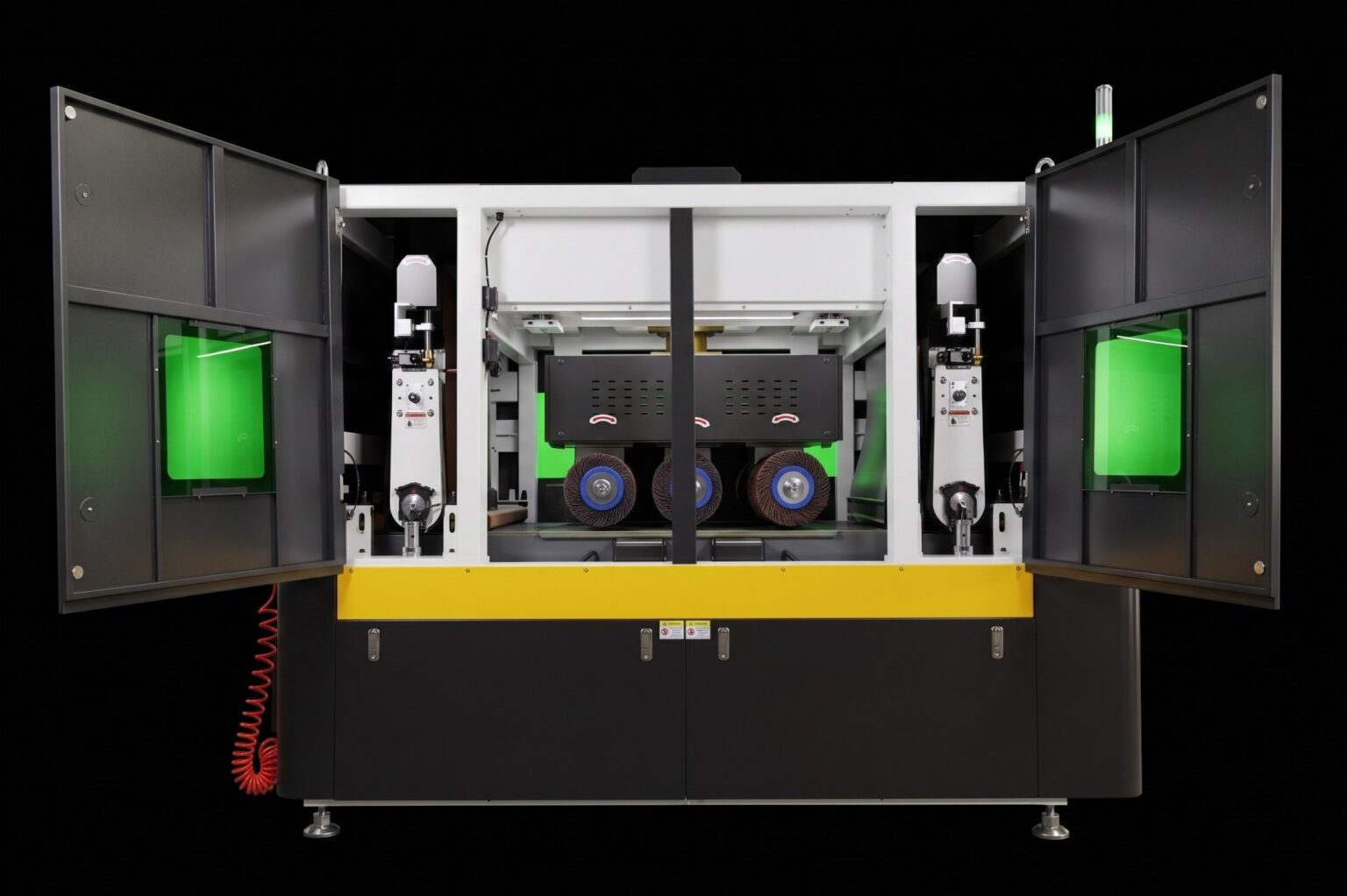
Commencing at elaborate study of intelligent apparatuses built specialized in removing burrs feature changed engineering procedures, granting considerable progress across tempo and excellence. This document investigates the varied types of tools, made up of media abrading units, circular devices, and state-of-the-art numerical applications. We will present the gains of using such devices, like cut manpower requirements, boosted product uniformity, and heightened fabrication capacity.
Corner Trimming Units: Precision Completing Described
Edge polishing systems offer a state-of-the-art solution for realizing accurate completion on materials. Different from manual techniques, these mechanized tools furnish regular results and considerably increase assembly capability. The apparatuses habitually employ different grinding instruments like spinning discs, smoothing discs, or particular designs to extract sharp boundaries and imperfections. This process is crucial in a wide spectrum of industries, including medical and high-tech.- Enhance component quality
- Reduce manufacturing costs
- Expand amount and functionality
Residue Removal Tools: Delivering Pristine, Excellent Surfaces
State-of-the-art metal processing activities regularly produce significant amounts of byproducts, a byproduct that, if unremoved, can severely damage the quality of the deliverable. Fortunately, advanced waste disposal devices offer a robust solution. These dedicated machines, employing techniques like scraping, are designed to exhaustively eliminate this unwanted material, ensuring a spotless and superior surface. The resulting enhancements include diminished rejection rates, better aesthetic appeal, and an overall escalation in manufacturing speed. By utilizing innovative slag removal technology, manufacturers can consistently deliver exceptional surfaces and adhere to stringent quality specifications.
Thin Metal Surfacing: The Benefits of Deburring Devices
Reaching a leading coating on sheet metal modules is imperative for performance, and deburring tools provide important improvements over non-automated methods. Reducing burrs expeditiously not only boosts the appearance quality of the piece, but also stops probable malfunctions during construction and functioning. Additionally, intelligent deburring methods augment manufacturing tempos and reduce staff disbursements.
Maximizing Sheet Metal Production with Automatic Deburring
With the goal to boost performance in sheet metal creation, explore self-operating deburring methods. Hand deburring is regularly protracted and susceptible to fluctuations. Employing robotic deburring affords meaningful benefits, like diminished worker expenditures, enhanced item consistency, and amplified production rates. This funding are capable of quickly prove worthwhile.Determining the Optimal Deburring Unit for Your Endeavor
Finding the optimal deburring device for your distinct needs necessitates a precise assessment of several features. First, consider the nature of medium you're managing – brass requires specialized techniques than synthetic. Later on, reflect upon the measurements and outline of the parts needing deburring. Ultimately, review your manufacturing output; a large-scale operation requires a alternative type of setup than a low-volume one. Failing to account for these aspects may result in weak results and increased expenditures.
Edge System Process: Developments and Breakthroughs
New burring machine operation is involved in rapid growth, caused by the requests for improved precision and output in activities methods. Major developments include the merging of programmable machines for versatile deburring activities, alongside innovations in finishing technology. We're what's more tracking a increase in small-scale burr removal devices designed for focused functions, and new systems like magnetic edge-removal are gaining momentum. The direction indicates towards expanded networking of edge-removal tools within the integrated operation surroundings.
Improving Composite Component Strength with Rim Chamfering
Many fabricating processes for aluminum parts introduce sharp edges, which can lead to stress accumulations and fragilities that compromise overall performance. Outline rounding, a simple yet influential formula, offers a straightforward solution. It includes slightly trimming the pointed edges of a module during the machining stage. This cuts down stress points, strengthens fatigue capacity, and can avert fracturing. Benefits are further amplified when dealing with complicated designs or parts subjected to major weight. Considerations include the optimal bend of the curved section and its consequence on combination with other segments.
- Diminishes Stress Clusters
- Raises Operational Durability
- Thwarts Chipping
Waste Separation vs. Deburring : Grasping the Contrasts
Albeit many machinists use the expressions “slag separation” and “deburring” interchangeably, they signify distinct operations in metal assembly routines. Edge trimming focuses on cleaning the sharp, often tiny, outgrowths created during milling operations—these are excess material of stock left on the element. Waste excision, conversely, addresses those byproduct – typically a combination of impurities – that occurs during processes like smelting. Essentially, deburring deals with subsidiary brims, while slag eradication deals with one byproduct of a different procedure. To conclude, computerized deburring and impurity removal Edge Finishing equipment are vital components of modern metal industrial that secure top-notch finished products with cut defects and boosted efficiency.Ending the study points out the significant role of leading automated deburring technologies in modernizing processing measures and facilitating businesses accomplish heightened productivity and performance.